
SLP Data Sheets & Intake Paperwork Simplified
Back-to-school time can be exciting, full of fresh starts and possibilities. I am a forever optimist, so I always see fresh starts as a way to “get it right” and do better this time. But for many of us SLPs, it can also feel completely overwhelming. New caseloads, new schedules, evaluations, progress reports, and service coordination all seem to hit at once. That is why I created my slp data sheets simplified overview for you today.

But here's the good news: it doesn't have to feel that way. There are simple ways to ease the pressure, reduce decision fatigue, and create a calmer, more connected start to the school year.
This year, I’m focusing on what actually works: simple, low-tech systems that help me feel calm, connected, and in control. At the heart of this system?
→ SLP data sheets and paper-based organization.
Why “Digital Everything” Isn’t the Answer
A few years ago (honestly, for the past 10 years), I thought the solution to overwhelm was to digitize everything. Online caseload tools, digital planners, browser-based data sheets, password-protected drive folders… you name it, I tried it.
In theory, it should have helped.
In reality, it made everything harder. So much harder.
I realized most of my fatigue came from a “hack,” screen, or app. I am not exaggerating. Technology, while it has made life easier in SOME cases, it hasn’t always made it better.
The Simplicity of Paper and Pencil
Do you know what works best?
A simple paper and pencil planner. For these tasks, I'm going back to my roots, ha.
I found myself clicking through tabs, reloading pages, forgetting passwords, getting locked out of sites, and spending my planning time troubleshooting tech instead of taking SIMPLE data.
One day, I realized, I'm over complicating this!
I don't think data collection was even a problem until an ad, company, or website told me it was.
Even worse—and this is a HUGE soapbox for me—I noticed my face was buried in a screen during therapy. I wasn’t making eye contact with my students. Also, my students were a bit on edge when I was clicking a button or screen after every production.
I may have been recording data, but I was missing that much-needed connection.
The Doctor's Office Moment
It reminded me of being in a doctor’s office. You know that moment when the doctor walks in, sits down, and immediately starts typing? They ask you questions without looking up, nod mechanically, and their screen gets more attention than you do.
I walk away from those appointments feeling invisible.
It made me ask myself: is saving 2–3 minutes really worth the cost of losing connection?
Maybe efficiency isn’t always king.
What I Do Now—and Why It Works
So I went back to basics. I created and printed SLP data sheets for each student. I stored them in a folder along with a simple overview page and jotted down initial observations, goals, and service times.
Of course, I LOVE digital materials where we all interact with them together. That saves time and sanity. I’ll dive into that differentiation another time.
Now, at the beginning of each school year (or for me, when a client starts coming to my office), I prep a paper data sheet for each student and store it in a simple folder. I quickly jot down goals, service times, and initial observations. Then, I attach the pen-and-paper data sheet that works best for that student or group.
And I stick with it. It takes just a few minutes to take 10–20 data points when needed.
I also provide families with a notification of services and a goal review sheet that I fill out WITH THE STUDENT during our first or second session. It takes 5–10 minutes max, but it sets the tone for trust and clarity that lasts all year.
Yes, it’s analog-ish. But it works. And research supports this approach.
Why Presence > Perfection
A 2014 study published in Computers in Human Behavior found that the presence of mobile devices during face-to-face interactions significantly reduced the quality of conversation and connectedness. Similarly, Turkle (2015) argues that constant digital engagement comes at the cost of empathy and presence.
In our field, presence matters. Building trust matters. Kids notice when you’re really listening.
Start Simple: SLP Data Sheets & More
That’s why my Back-to-School Simplicity Series starts here: with paper.
Inside the membership, you can grab (in both English & Spanish):
A Student Overview Sheet (to capture what you need at a glance)
I quickly fill out this sheet on day one so I have all the data I need at my fingertips. A parent phone, in a pinch (no access to a password protected site needed) has saved the day on more than one occasion.

Editable Parent Notification of Services
I fill this editable sheet for each student and email the parents a copy. This sets up clear communication and trust from the beginning and it only takes a few minutes.

Goal Review Worksheets
On the first day of therapy, I ALWAYS have my students fill out their own goal review sheet. This is a simple yet essential step to have students start to take ownership over their learning and progress. It takes only 5 minutes. There are a few different formats to pick from on the site.


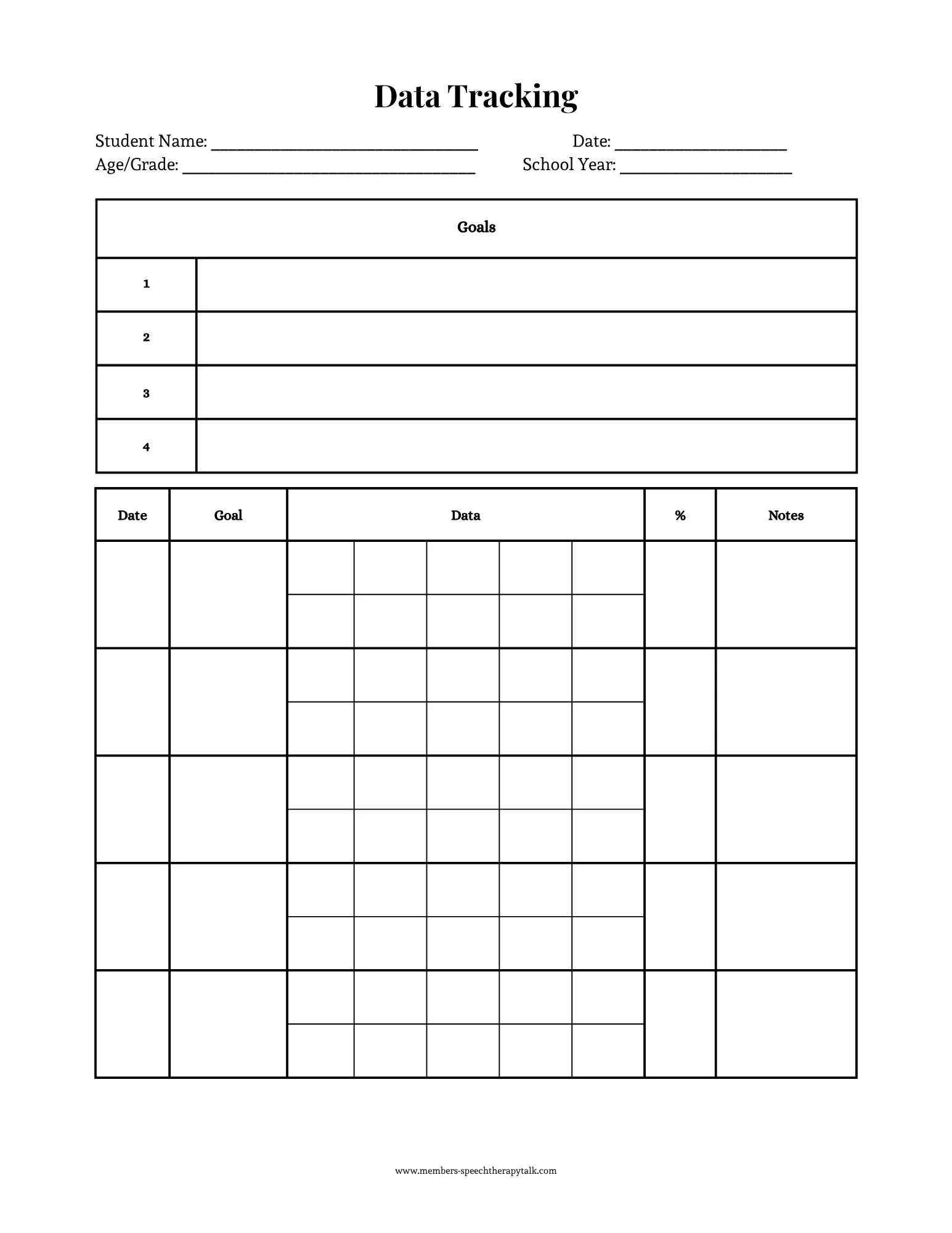
SLP Data Sheets
Last, I choose a paper and pencil data tracking sheet that works for each specific student and I throw it in their folder. There are many different data tracking forms available so please find which one works best for you.
You can customize these for your caseload and start your year organized, present, and connected.
After each session, you can take the data collected and enter quickly where you need to. For me, I enter data in an EMR. It takes me 10 seconds at the end of the session during clean up. Done.
Your Back-to-School Reset Starts Now
This fall, I hope you give yourself permission to choose presence over perfection.
Let me help you make that easier.
- Access all English back-to-school materials inside the membership here.
- Access all Spanish back-to-school materials inside the membership here.
Watch How To Use Materials
Click the image below to learn how to use the materials!
Next Week: Collecting Data Easily
Next week, I will cover my paper and pencil, informal data tracking options for language and articulation skills. These easy tools allows you to quicking check for regression or progression on goals after breaks and throughout therapy!
Once done, throw them in the folder and access them when needed.
References
- Przybylski, A. K., & Weinstein, N. (2013). Can you connect with me now? How the presence of mobile communication technology influences face-to-face conversation quality. Computers in Human Behavior, 29(4), 1528–1534.
- Turkle, S. (2015). Reclaiming Conversation: The Power of Talk in a Digital Age. Penguin Press.

